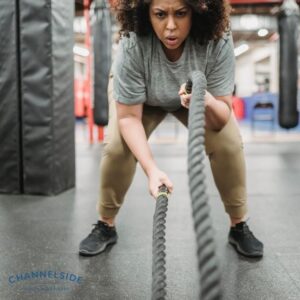
Weight Loss During Menopause: How to Protect Muscle While Losing Fat

Weightlifting, weight loss during menopause

Written by Christine Sclafani, PA-C, MMSc | Published November 10, 2026

2020 CDC data show that fewer than 1 in 4 women aged 45-64 strength train as often as guidelines recommend. To help protect your muscle during weight loss in menopause, strength train at least twice a week, eat enough protein, and keep your calorie deficit fairly modest. Channelside Health and Wellness can help you put that plan together.

What Menopause Does to Muscle and Fat

Your body composition can change even if your weight doesn’t. The NIH-funded SWAN study followed 1,246 women through menopause and found that average fat gain rose from about half a pound per year to a full pound per year (about 3.5 lbs over 3.5 years). Lean mass (muscle, water, and organ tissue) declined by less than half a pound.

Total weight gain didn’t accelerate, which is why the scale can be so confusing. The larger the lean mass loss, the greater the risk. In a later SWAN analysis of 539 women, each additional 6.9% loss of lean mass was associated with a 63% increased risk of fracture after menopause.

Four Habits That Help Protect Muscle

These four habits are well backed by research.

Strategy

Starting Point

Why It’s on the List

Strength training

2 or more days a week, all major muscle groups

Greater effect on muscle than aerobic training

Aerobic activity

150 minutes of moderate activity a week

Greater effect on fat loss than resistance training

Protein

1.2 to 1.5 g per kg of body weight daily

May help retain lean mass

Calorie deficit

Moderate, not severe; ask your provider what fits

Advised by nutrition and obesity societies

Strength Training Comes First

A 2026 review of 126 studies and 4,019 women found no difference in strength gains before and after menopause (though the evidence quality was very low).

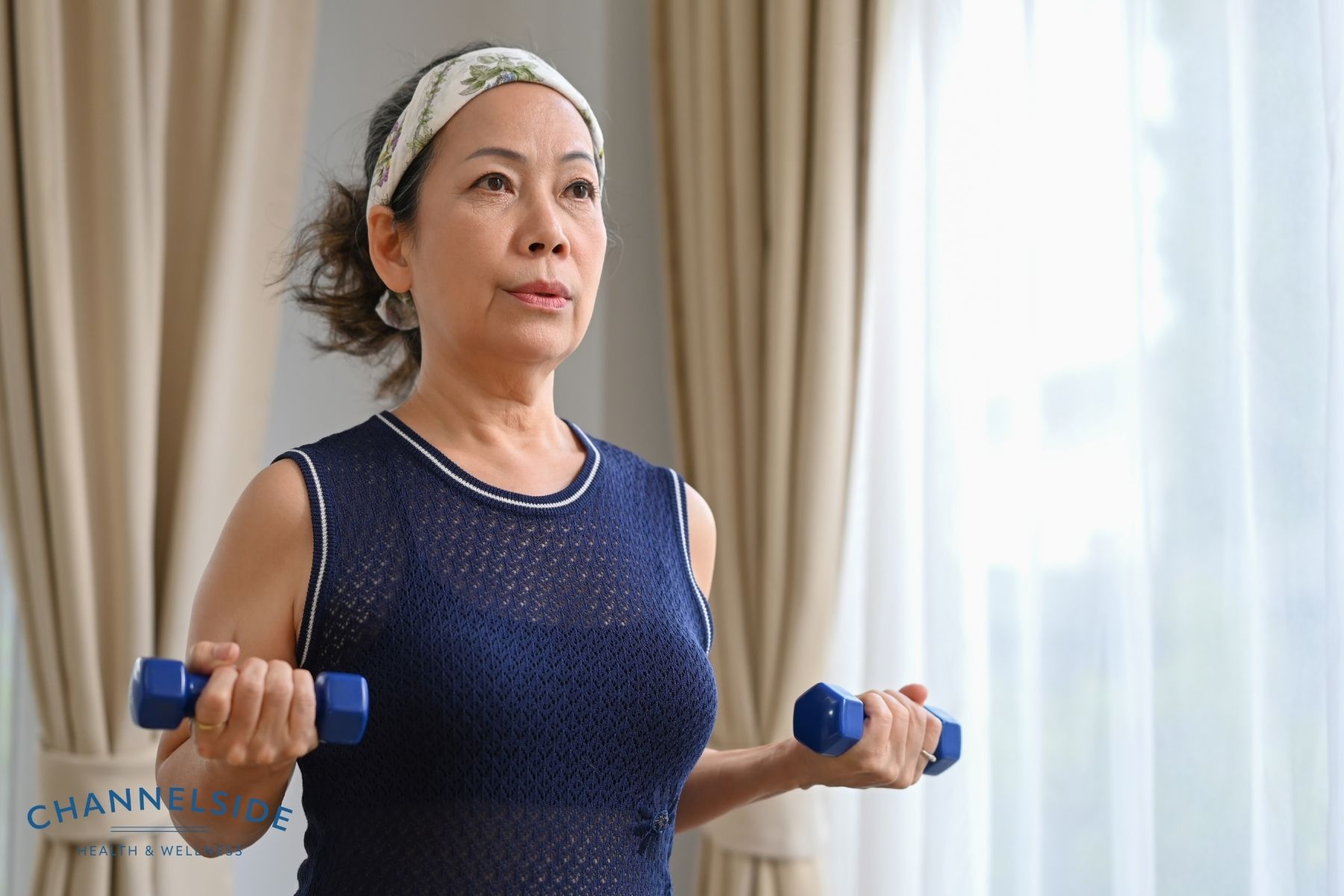
Resistance training may also be of use during dieting. In six randomised trials of older adults with obesity, lifting three days a week prevented 93.5% of the lean mass loss that would otherwise occur with calorie restriction alone (i.e. around 1.8lbs).

Two days may be the minimum. In a 20-week trial of 31 women, twice-weekly lifting increased strength in postmenopausal women but showed no measurable gain in muscle mass.

Eat Enough Protein

The RDA is 0.8g of protein per kg of body weight. Weight loss research suggests 1.2 to 1.5g may be better for preserving lean mass. For a 160lb woman, that’s about 87 to 109g per day.

Not every trial agrees, and people with severe kidney disease may need to restrict protein, so check with your provider.


Weight Loss Medication Doesn't Replace Strength Work

Most weight loss involves some loss of lean mass. A 2026 meta-analysis of 20 RCTs found lean mass loss of 25% with tirzepatide, 35% with semaglutide, and 26% with lifestyle programs. Groups that also did resistance training lost 17.5% (though again, those comparisons were from different studies).

Those trials weren’t menopause-specific, so treat the numbers as a guide.

At Channelside Health and Wellness, a bespoke weight loss plan can include protein targets, strength work, and follow-ups.

Common Questions About Menopause and Muscle

Here are quick answers.

Can you build muscle after menopause?

Research suggests yes, though strength gains are better documented than muscle growth.

Is the Scale Enough to Track Progress?

Not on its own. Weight can’t separate fat from lean mass, so strength and waist size add context.

How Many Days a Week Should You Strength Train During Menopause?

The CDC recommends at least two. A 2023 meta-analysis of 27 trials in menopausal women favored three, but a 2026 review found no clear link between frequency and results.

Book a Consultation for Menopause Weight Loss

Weight loss through weight training during menopause
Learn how weight loss and weight training go together during menopause.

Want to protect your strength while you lose weight? Book a consultation with Channelside Health and Wellness in Tampa to talk through your goals with a licensed provider.

This content is educational and isn’t a substitute for individualized medical advice. Talk with your provider before starting a new plan.

About the Author: Christine Sclafani, PA-C, MMSc, is an NCCPA board-certified physician assistant and the founder of this Tampa practice. She spent a decade in orthopedic surgery and sports medicine.

Download our free guide for women today!

Sources

Related Posts

Latest news & articles