
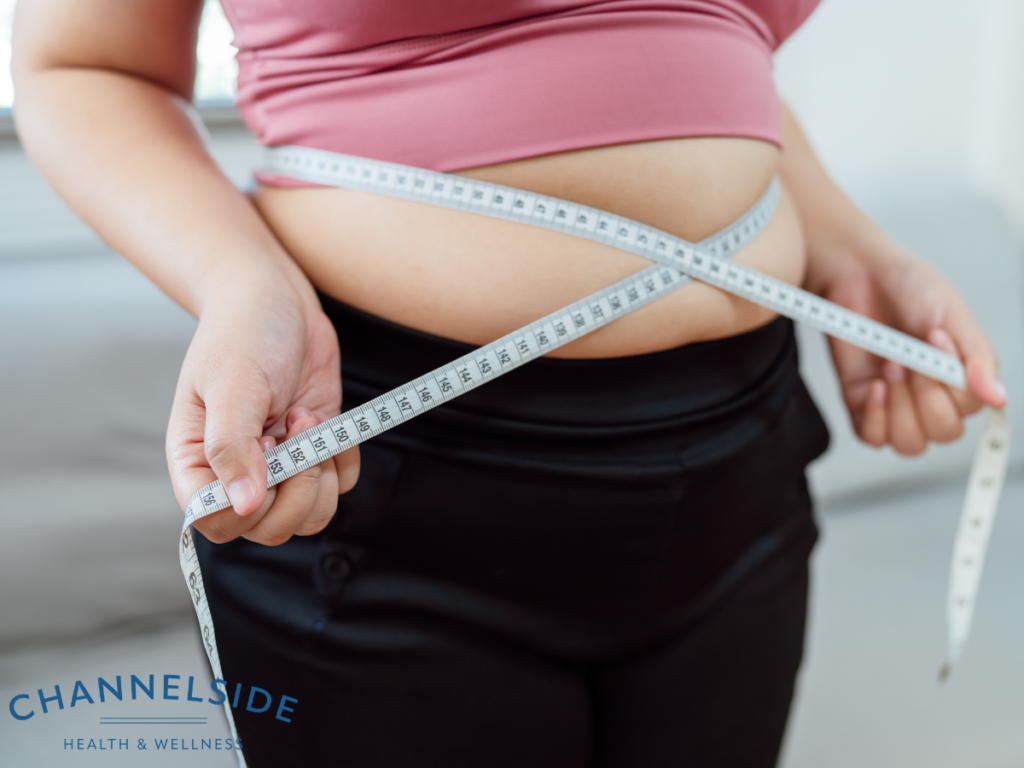
Perimenopause weight gain isn’t really about the number on the scale. Research shows body weight often keeps rising at a steady, unchanged pace through this transition, without a sudden jump, while fat and lean mass trade places underneath it, especially around the belly. Channelside Health and Wellness sees women blame themselves for changes that are mostly biology, not willpower.
Why the Scale Might Not Move as Much as You'd Expect
About 1.3 million U.S. women reach menopause every year, and most of them start feeling the effects years earlier, in perimenopause. According to the primary SWAN study, fat gain accelerates and lean mass starts declining at the same time, beginning roughly two years before your final period and continuing for about two years after it. Because one is rising while the other is falling, total body weight keeps climbing at roughly the same pace it already was, without a sudden acceleration, even while your actual body composition is shifting underneath it.
Where the Fat Lands Matters as Much as How Much
Estrogen normally favors a more hip-and-thigh fat pattern. As it declines, fat tends to shift toward the abdomen, and that shift can happen even when total weight barely changes. Visceral fat, the kind that sits around your organs rather than just under your skin, carries more metabolic risk than the same amount of fat elsewhere, which is part of why clothes can fit differently long before the scale reflects it.
Does This Actually Cause Insulin Resistance?
The honest answer is that insulin resistance isn’t automatic in perimenopause. A 2022 review in the journal Obesity found several longitudinal studies showed no consistent link between menopausal status on its own and insulin resistance or diabetes risk, while data from SWAN pointed to a real increase in metabolic syndrome risk during the transition, driven more by shifting cholesterol and lipid levels than by blood sugar itself. Changes in abdominal fat, age, sleep, activity, and a person’s existing metabolic risk can all play a role. The lipid shifts are real. Menopause itself doesn’t cause insulin resistance as clearly as some might claim.
Timing in the SWAN Study | What Changed on Average |
About 2 years before the final menstrual period | Fat gain accelerated and lean mass began declining |
Through about 2 years afterward | Those changes continued |
After that | Rates of change slowed on average |
None of that makes for a tidy explanation, which is exactly why the evaluation itself matters.
Why a Real Evaluation Beats a Hormone Panel Alone
Hormone levels swing so much during this transition that a single blood draw often isn’t a reliable way to diagnose it. Guidelines favor a provider who asks about your symptoms, your cycle changes, and your age, over one who leads with selling a big hormone panel before asking a single question. A provider may consider thyroid testing when your symptoms, history, or exam point that way, since thyroid disease can cause fatigue and weight changes that look a lot like perimenopause and is treatable on its own. At Channelside Health and Wellness, a licensed PA reviews your symptoms and history first, before anything else.
Questions to Ask Before You Assume "It's Just Perimenopause"

Do you ask about my symptoms and cycle changes, or just run a hormone panel?
Have you ruled out thyroid issues that can look like perimenopause?
Are we talking about body composition, or only the number on the scale?
What’s the realistic, sustainable plan here?
Ready to Understand What's Actually Happening to Your Body?
You’re not imagining this, and you’re not failing at anything. Book a consultation with Channelside Health and Wellness in Tampa, and get real answers about what your body is doing and why. Want to read more first? Download our free guide for women covering what to expect and what to ask before your visit.