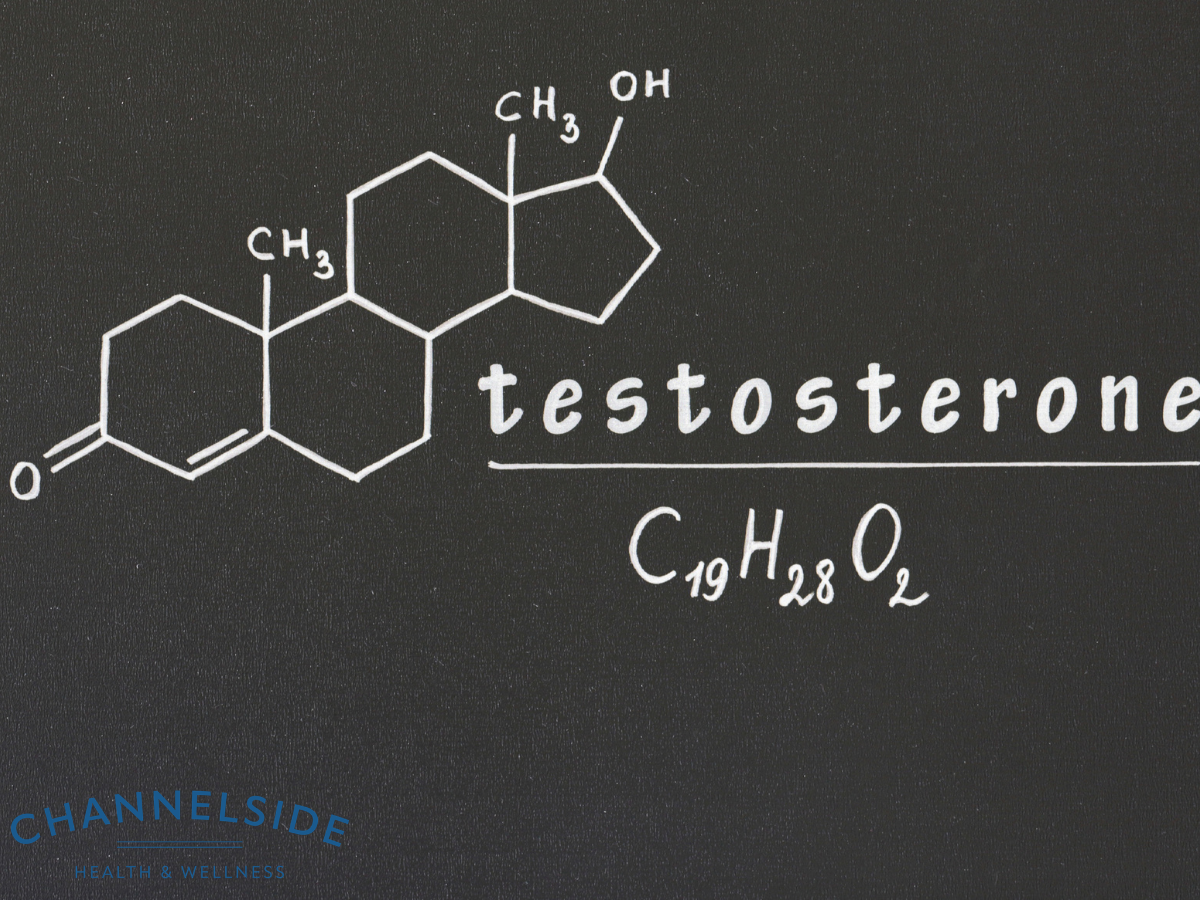

More testosterone should mean better fertility, right? Not quite. Testosterone replacement therapy can sharply lower sperm production, and in some men it shuts it down entirely. However, this isn’t permanent. So, don’t worry. If you want kids someday, low T still has treatment options. At Channelside Health and Wellness, we include fertility goals from the first visit.
Does TRT Cause Infertility?
It can. Your brain and testes run on a feedback loop. Once circulating testosterone looks sufficient, the pituitary gland dials back two signaling hormones: luteinizing hormone (LH) and follicle-stimulating hormone (FSH). Your testes need both to make their own testosterone and produce sperm.
Add testosterone from the outside, and your brain reads it as “we’re covered.” LH and FSH drop. Testosterone inside the testes falls too, even while your blood levels look great. In a 2005 study of healthy volunteers in The Journal of Clinical Endocrinology & Metabolism, weekly testosterone injections cut those levels by 94%. Sperm output slows. Sometimes it stops.
How often does it stop? Researchers writing in The Journal of Urology estimate that about 40% of TRT patients develop azoospermia (no sperm in the semen).
What Do Medical Guidelines Recommend?
Two American Urological Association guidelines address TRT and fertility directly:
The testosterone deficiency guideline, reaffirmed in 2024, calls for a reproductive health evaluation before treatment in men interested in fertility.
That same guideline says clinicians may use hCG, SERMs, aromatase inhibitors, or a combination for patients hoping to maintain fertility.
The AUA/ASRM male infertility guideline, amended in 2024, goes further: men interested in current or future fertility shouldn’t be prescribed testosterone.
Is Fertility Loss From TRT Reversible?
Often, yes, but it takes time. Some of the clearest data come from a 2006 analysis in The Lancet that pooled 30 male contraceptive studies covering 1,549 healthy men. After they stopped the regimen, the median time back to the study’s recovery threshold of 20 million sperm/mL was 3.4 months. Sperm count alone doesn’t guarantee fertility, but it’s a useful benchmark.
Time After Stopping | Chance of Recovery to 20 Million/mL |
6 months | 67% |
12 months | 90% |
16 months | 96% |
24 months | 100% |
There’s a catch. Those participants started out with normal testosterone and were treated short-term. Men with diagnosed low T on years of therapy may not recover on the same schedule. Longer treatment, longer-acting formulations, and lower starting sperm counts were all linked to slower recovery.
How Can You Protect Fertility Before Starting TRT?
Your provider may talk through a few options:

Baseline semen analysis. A reference point that makes any changes easy to spot.
Sperm banking. A simple backup if you’re planning a family later.
hCG alongside TRT. In a small retrospective study of 26 men taking TRT with low-dose hCG, none developed azoospermia during follow-up. Research is still limited, so it’s a decision to make with your provider.
Alternatives to testosterone. Medications like clomiphene, used off-label, can help certain men boost natural testosterone without suppressing sperm.
At Channelside Health and Wellness, Christine Sclafani, PA-C, MMSc, reviews your labs, symptoms and plans for children together, so your treatment fits your timeline. If you’re also weighing TRT for energy and metabolic health, our guide to TRT lifespan management and aging explains its role beyond fertility.

Plan Your Hormones Around Your Future
Low T and family planning are best handled together. If you’re considering TRT and want to keep fertility on the table, book a consultation with Channelside Health and Wellness in Tampa. We’ll walk through your options and what each one means for you. Looking to learn more? Download our free guide for men!
This article is for educational purposes only and isn’t a substitute for individualized medical advice. Talk with a qualified provider before starting or stopping any hormone therapy.